
Guide
Getting Your Rental Deposit Back in Switzerland: Cleaning Deductions Explained
In Switzerland, a landlord can hold a security deposit (Kaution) of up to three months' rent — often several thousand francs for an apartment in Zug or Baar. That is exactly why the final settlement after you move out is the single most expensive dispute in Swiss tenancy law. The good news: the law only requires you to hand back a thoroughly cleaned apartment, not a brand-new one. Normal wear and tear is never your responsibility, and if the landlord doesn't formally flag defects in time, they lose the right to claim them. This guide walks you through exactly which cleaning deductions are legal, which aren't, and how to avoid the three most common dispute triggers — limescale, mould in the silicone joints, and streaky windows or a greasy oven.
How much money is actually at stake
Swiss law caps the security deposit (Kaution) at three months' rent for an apartment. For a typical 3.5-room flat in the canton of Zug, that can easily be CHF 5'000 or more — money sitting in a blocked account (Sperrkonto) that your landlord can only touch with your written consent or a legal ruling.
- Deposit: capped at 3 months' rent, held in an account registered in your name.
- The landlord cannot simply withdraw funds on their own — they need either your consent or a court/mediation decision.
- If nothing is agreed or contested, the bank must release the deposit at the latest one year after you move out, even without the landlord's consent.
What the law actually requires: clean, not brand-new
You owe the landlord an apartment returned in the condition that follows from normal contractual use (Art. 267 of the Swiss Code of Obligations, OR). You are not liable for normal wear and tear from everyday living — only for damage that goes beyond it. A useful rule of thumb: the moment you'd say 'oops, that was a small accident,' you've crossed into excessive wear. Everything else is ordinary use that the next tenant has to accept too.
- Normal wear (no deduction allowed): slightly worn carpets, faded paint, small nail or screw holes, light scuff marks on flooring.
- Excessive wear or damage (deduction possible): burn marks, deep pet scratches, water stains on parquet, heavy soiling beyond normal use.
- Even for real damage, you only owe the depreciated value (Zeitwert), not the replacement cost — calculated using a standard lifespan table for each item.
Cleaning deductions that ARE allowed
A cleaning deduction is legitimate only if the apartment is genuinely not clean enough at handover — not just slightly below the property manager's personal taste. Even then, the landlord must first give you a short grace period (Nachfrist) to clean it properly yourself. Only if that deadline passes unused may they hire a cleaning company and bill you the cost, receipt included.
- The apartment is demonstrably dirty at handover (e.g. caked grease in the oven, heavy limescale, blocked drains).
- You were given the chance to fix it yourself and didn't take it.
- The landlord provides an actual invoice or receipt from the cleaning company — a flat, undocumented charge is not enough.
- The issue was recorded in the handover protocol (Übergabeprotokoll) or reported to you in writing within the deadline.
Cleaning deductions that are NOT allowed
In practice, far more gets deducted than the law permits. These four are the most common unlawful deposit deductions.
- Normal wear relabelled as 'dirt' — light everyday marks that any lived-in apartment shows.
- Defects that were never entered in the handover protocol and never reported to you promptly — undocumented defects create no liability.
- Missed deadlines: for hidden defects, the landlord has 14 days after handover to send you a detailed written notice. Miss that window, and the claim is generally forfeited.
- Flat cleaning fees with no invoice, no prior grace period to fix it yourself, or for issues that were already there when you moved in.
The 3 biggest dispute triggers — and how to eliminate them
Almost every deposit dispute traces back to the same three spots. Handle these properly and you dramatically cut your risk.
- Limescale in the bathroom and kitchen — on taps, shower walls, and grout. Warm water with vinegar or a standard descaler removes most buildup, if you tackle it early instead of on move-out day.
- Mould in the silicone joints — the classic complaint at handover. Dark spots around the shower, tub, and sink stand out immediately. If the sealant is badly discoloured or crumbling, replacing it professionally is often the only real fix.
- Streaky windows and a greasy oven — the first two things checked at the final inspection (Abnahme). Windows including frames and sills, plus a fully degreased oven, are non-negotiable parts of a proper move-out clean.
The handover protocol is your insurance policy
The handover protocol (Übergabeprotokoll) is the single most important document when you move out. It records which defects exist at handover and who's responsible for them. Anything not written down is very hard for the landlord to charge you for later. Insist on a joint walk-through, read the protocol carefully before signing, and get a copy on the spot. Take your own time-stamped photos of every room. If you disagree with an entry, say so at the appointment and have your objection noted in writing.
How to guarantee 100%: professional move-out cleaning with an acceptance guarantee
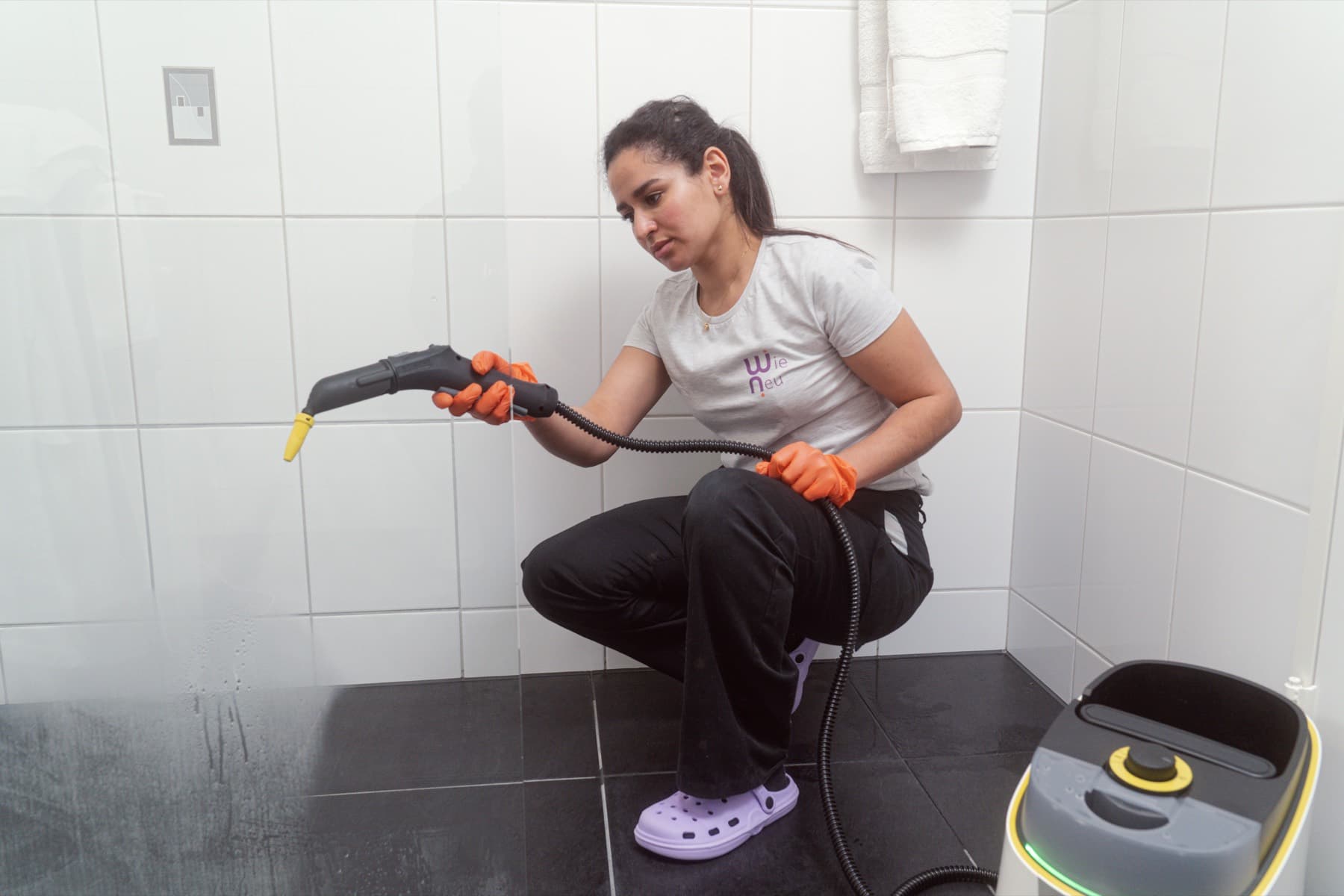
The safest route to a full deposit refund is a professional move-out clean (Umzugsreinigung) with an acceptance guarantee (Abnahmegarantie). Wie Neu - Reinigungsfirma cleans your apartment in the canton of Zug to the standard property managers check for at handover — limescale, grout, windows, and oven included. We bill honestly by the hour: premium rate from CHF 49.90 per hour and person, excl. VAT, with a written time estimate before we start. If you'd rather know the total cost upfront, you can also request a fixed-price quote for the move-out clean. If the property manager still isn't satisfied at the final inspection, we come back and fix it at no extra cost under our acceptance guarantee.
FAQ
Frequently asked questions
How much can a landlord charge as a security deposit (Kaution) in Switzerland?
At most three months' rent. The money must sit in a blocked account (Sperrkonto) registered in your name.
How long does the landlord have to report defects after I move out?
Visible defects must be recorded on the spot in the handover protocol. For hidden defects discovered later, the landlord has 14 days to send a detailed written notice — after that, the claim is generally forfeited.
What counts as normal wear and tear that I don't have to pay for?
Slightly worn carpets, faded paint, small nail holes, or light scuff marks on the floor all count as normal wear from everyday, contractual use — you owe nothing for these.
Can the landlord just hire a cleaning company and send me the bill?
Only if the apartment was genuinely not clean enough at handover and you were first given a short grace period to fix it yourself. They also need to show an actual invoice or receipt.
What if I never signed a handover protocol?
Without a protocol, or without a timely written notice of defects, the landlord generally loses their claims against you.
How do I guarantee I get my full deposit back?
A professional move-out clean covering limescale, silicone joints, windows, and the oven, combined with a careful joint handover, a signed protocol, and your own photos.
Wie Neu - Reinigungsfirma in Baar makes sure your deposit comes back — move-out cleaning with an acceptance guarantee across the canton of Zug. Request your free, no-obligation time estimate: call +41 77 987 17 79 or email info@wneu.ch.