
Guide
How to Clean Your Sofa at Home: Tricks That Actually Work
The sofa is the most-used piece of furniture in any home – and the least cleaned. We sit, eat, work and nap on it, kids and pets included. No surprise it collects more dust, skin cells and crumbs than any rug in the house. Yet a genuinely useful, practical guide on the topic is hard to find – most results are generic and skip the details that actually matter. We're closing that gap: home remedies backed by more than one source, a plain-English explanation of the cleaning-code label on your cushions, and an honest answer on when home remedies simply aren't enough.
Why sofas get dirty faster than you'd think
Unlike a floor, a sofa isn't wiped clean – it's sat on. Every time someone sits down, skin oil, dust and crumbs get pressed deeper into the upholstery fibres instead of staying on the surface. Add dust mites, which feed on shed skin cells and thrive in warm, slightly damp cushions, and a sofa that's never vacuumed can end up holding more allergens than a carpet – you just can't see it, because the buildup sits inside the fibres, not on top of them.
Step one: check the cleaning code on the label
Before reaching for any home remedy, find the cleaning label – usually stitched under a seat cushion or on the frame. The letter code isn't a formality; it's the manufacturer's binding instruction on what your sofa can handle. No label, or it's been cut off? Test on a hidden spot first, never straight on the middle of the seat.
- W – water-based cleaners only, such as a mild soap solution.
- S – solvent-based (dry) cleaners only, no water at all.
- WS (or W/S) – either works; start with the gentler water-based option first.
- X – vacuum or brush only, no liquids whatsoever. Stains here need a professional.
The base routine: vacuum weekly
The most effective home remedy is also the most underrated: your vacuum cleaner. Running an upholstery attachment over the seat, back and armrests, plus into the seams between cushions, once a week lifts loose crumbs and dust before they work themselves in and turn into stubborn stains. It also measurably cuts down dust mite levels and makes every later stain treatment easier.
Treat fresh and greasy stains right away
Fresh stains: blot immediately with a clean, absorbent cloth – working from the outside of the stain inward, never rubbing. Rubbing pushes the liquid deeper into the fibres and spreads the stain further.
Greasy stains: stir a tablespoon of mild, colourless dish soap into a cup of lukewarm water, apply with a cloth or spray bottle, let it sit for 30 to 60 minutes, then lift off with a slightly damp cloth.
Getting rid of odours: the baking soda trick
For musty odours, baking soda (Natron) is the most reliable, cheapest remedy there is – and it works completely dry, without adding moisture to the fibres.
- Vacuum the sofa thoroughly first to remove loose dirt.
- Sprinkle baking soda generously over the dry surface.
- Work it gently into the upholstery with a soft brush.
- Leave it for at least 6 hours – overnight is best.
- Vacuum up all the residue.
The shaving-foam trick for set-in stains
Less well known but effective on stubborn, dried-in stains in hard-wearing fabrics: plain, cheap shaving foam (not gel). Important: never use this on leather, and since the foam contains alcohol, always test a hidden spot first.
- Spray the foam directly on the stain and work it in lightly.
- Leave it for about 10 minutes.
- Brush it out in one direction with a soft brush.
- Wipe with a damp cloth and let it air-dry.
By material: fabric, microfibre, leather
Not every sofa takes the same treatment – the material decides which home remedies are safe to use:
- Fabric – follow the cleaning code on the label; with a W or WS code, baking soda, dish soap solution and shaving foam generally work well.
- Microfibre – use distilled water only, never tap water (mineral content leaves rings); apply dish soap sparingly as foam, dab from the outside of the mark inward.
- Leather – the most delicate: only a barely damp cloth with distilled water, never soaked; no degreasers, no alcohol, no shaving foam. Condition twice a year with a dedicated leather care product.
The golden rule: test a hidden spot first
Whatever remedy you're using, test it on a hidden area first – the underside of a cushion or the back of the frame work well. Wait a few minutes to a few hours and check whether colour, texture or sheen has changed. Only once that spot looks unaffected should you treat the visible area. This one step prevents most of the costly mistakes people make cleaning a sofa at home.
Mistakes that ruin sofas
- Too much water – a soaked sofa often dries unevenly, which can leave rings, mildew or a musty smell behind.
- Hard rubbing – instead of lifting a stain, it pushes it deeper into the weave and can visibly damage the fibres.
- Aggressive cleaners without checking the label – bleach, spot removers or solvents that don't match the code can permanently damage colour and material.
- Skipping the spot test – colour bleeding or fabric damage often only shows up after a few minutes; a hidden-spot test costs nothing, but a ruined cover doesn't come cheap.
When home remedies aren't enough
Honestly: for old, set-in stains that have already been rubbed over more than once, odours that have worked their way into the foam and stuffing, or heavy dust mite and allergen buildup, baking soda, shaving foam and dish soap can only do so much. Those problems sit deep in the foam core, out of reach from the outside.
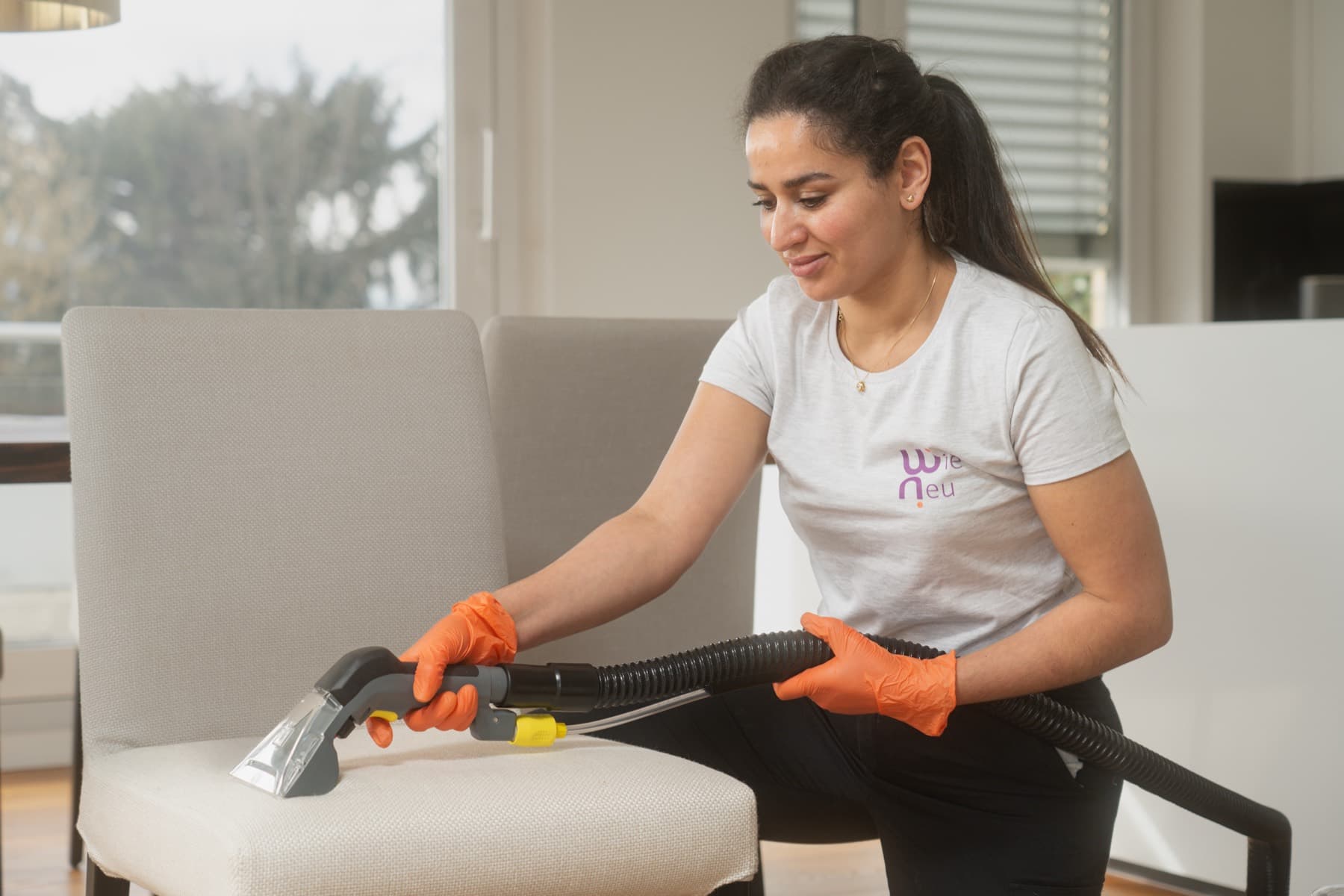
That's where professional upholstery cleaning with hot water extraction comes in: it loosens dirt and residue deep inside the cushion, flushes it out, and extracts the moisture and dissolved dirt in the same pass. The sofa stays only lightly damp and is usable again far sooner than after an improvised wet clean. Wie Neu - Reinigungsfirma offers sofa cleaning across Kanton Zug at the Premium rate, from CHF 49.90 per hour and person (excl. VAT) – with a written estimate of the hours needed before we start.
FAQ
Frequently asked questions
Can I really clean my sofa at home with just baking soda?
Yes, for odours and light soiling baking soda is very reliable: apply it dry, leave it for at least 6 hours, then vacuum thoroughly. For old, deeply set stains it has its limits.
What does the X code on a cleaning label mean?
X means vacuum or brush only, no liquids at all. A stain on an X-coded sofa should only be handled by a professional using dry methods.
Is the shaving-foam trick safe for every sofa?
No. It works on hard-wearing fabrics with a W or WS code, but not on leather and not on sofas coded X. Always test a hidden spot before using it.
Why does microfibre specifically need distilled water?
Tap water contains minerals that leave visible rings on microfibre once the spot dries. Distilled water avoids that.
How often should I vacuum my sofa?
Once a week with an upholstery attachment – it removes loose dirt before it works into the fibres and noticeably cuts down dust mites.
When is professional upholstery cleaning worth it?
For old, set-in stains, odours embedded in the foam and stuffing, or heavy allergen buildup. Wie Neu - Reinigungsfirma cleans sofas across Kanton Zug at the Premium rate, from CHF 49.90 per hour and person (excl. VAT), with a written hours estimate up front.
Home remedies not cutting it anymore? Wie Neu - Reinigungsfirma in Baar cleans your sofa professionally with hot water extraction – Premium rate from CHF 49.90 per hour and person (excl. VAT), with a written estimate up front. Get in touch: +41 77 987 17 79 or info@wneu.ch.